Columbia College Participates in Regional “Every Drop Counts” Project Advancing Interdisciplinary
Research on Impact of Microplastics in Water
Columbia College is participating in the collaborative initiative Every Drop Counts, a Central Valley–based project focused on investigating the impact of microplastics
in water systems and their effects on biological processes. As part of the project,
students studied macrophages—immune cells responsible for removing foreign particles—to
better understand how microplastics interact with living systems in the Central Valley.
Student teams from Columbia College, Modesto Junior College (MJC), the University
of California, Merced (UC Merced), and California State University, Stanislaus (CSUS)
presented their research findings at UC Merced on April 15, 2026, and at CSUS on April
18, 2026.
Columbia College has been collaborating with regional higher education partners to
develop
Every Drop Counts, an initiative supported by funding from the California Community College Chancellor’s
Office through a
Zero Textbook Cost (ZTC) Acceleration Grant to support colleges in creating, customizing, and adopting Open Educational Resources
relevant to learners in a variety of fields.
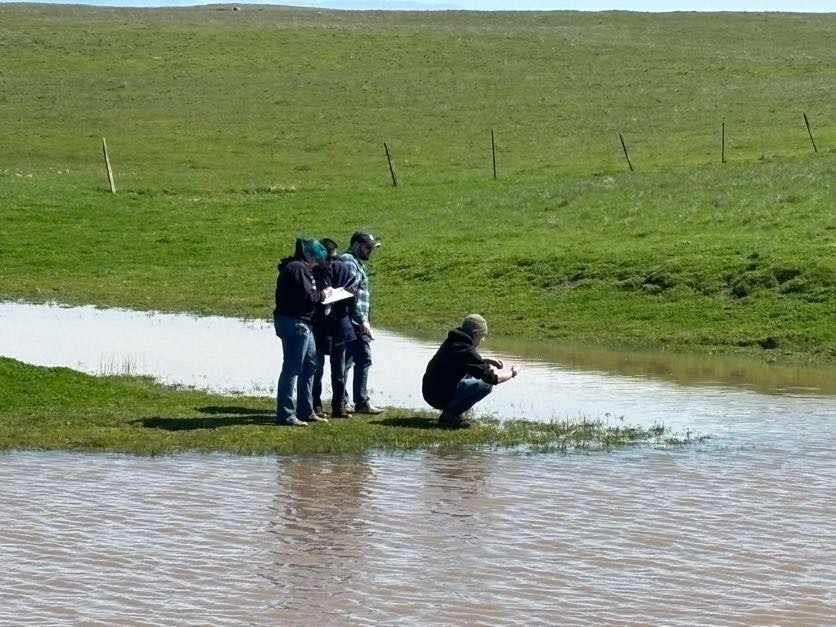
“Through Every Drop Counts, Columbia College has been part of creating meaningful citizen science research,
networking, and presenting our findings to the community during a number of opportunities
for our students,” said Interim President Chad Redwing. “The project emphasizes fieldwork,
data analysis, and complex problem-solving tied directly to Central Valley challenges.
It also supported the development of a stronger regional ecosystem of collaboration
and innovation across disciplines and institutions.”
Through its participation, Columbia College has helped to contribute to a model of
applied, interdisciplinary learning that prepares students for future academic and
professional pathways in science, humanities, and applied research.
“I was pleased to serve as a mentor and see our students develop data sets, research
protocols, and educational resources that will be shared more broadly with K–12 and
post-secondary institutions. Moreover, many of the learners participating in the project
are first-generation students who are now transferring to four-year institutions,”
Redwing added. “This is the kind of collaboration that continues to deliver value
well beyond the life of the grant project.”